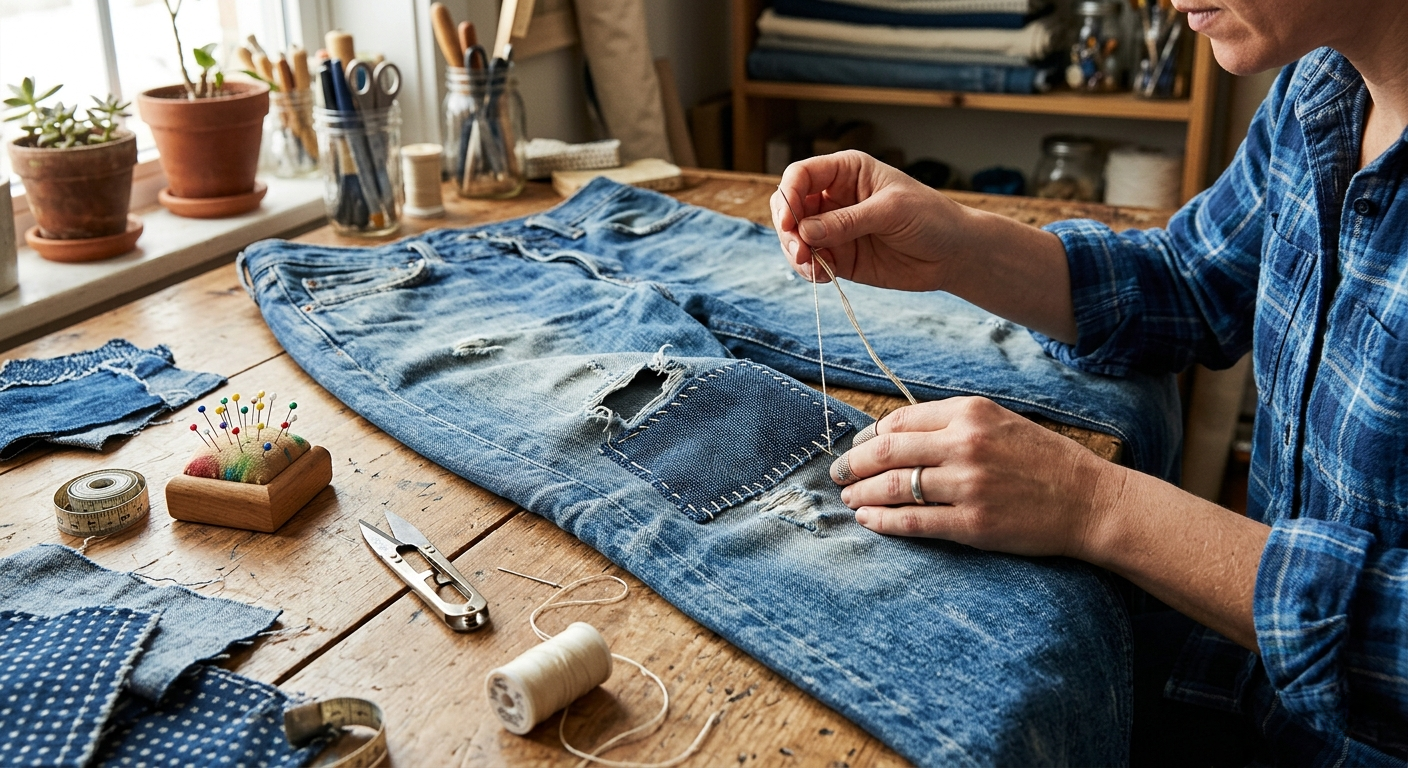
Learning how to patch jeans is a simple but highly useful skill that helps extend the life of your favorite denim while saving money and reducing textile waste. Instead of throwing away jeans with small rips or worn-out areas, patching allows you to restore them and keep using them for a long time. It also supports a more sustainable lifestyle by reducing the need to constantly buy new clothing, which is especially important in today’s fast fashion culture.
Jeans usually damage in high-stress areas such as the knees, inner thighs, and pockets, but that doesn’t mean they are beyond repair. With the right patching method, you can make even heavily worn denim strong again. In many cases, patched jeans become even more interesting because the repair adds character and uniqueness to the fabric.
Tools and Materials Needed for Denim Repair
Before you start learning how to patch jeans, it is important to gather all the necessary tools and materials so the repair process goes smoothly. Having everything ready in advance saves time and helps you focus on doing a clean and durable patch instead of stopping midway to search for supplies. The basic items include a piece of denim or strong fabric for the patch, scissors, pins, a needle, and strong thread that matches or contrasts with your jeans depending on your style preference.
In addition to these basics, a sewing machine can make the process faster and give stronger results, especially for larger holes or high-stress areas like knees. However, hand sewing works just as well for smaller repairs. You may also need fabric glue or iron-on adhesive if you prefer a no-sew method. Some people even reuse old jeans as patch material, which makes the repair more sustainable and cost-effective while ensuring the patch blends naturally with the original denim.
Preparing Your Jeans Before Patching
Before you begin the actual process of how to patch jeans, proper preparation is essential to ensure the repair lasts longer and looks clean. Start by washing and drying your jeans so that any dirt, oils, or shrinkage issues are removed. Clean fabric helps the patch stick or sew more effectively, whether you are using a hand-sewn method or an iron-on solution. Once clean, lay the jeans flat on a smooth surface so you can clearly see the damaged area.
Next, trim away any loose threads around the hole or worn-out section, as these can interfere with the patch and create uneven stitching. If the fabric is badly torn, gently reinforce the area by smoothing it out without stretching it too much. Proper preparation not only improves the strength of the patch but also makes the final result look more professional and neat, giving your jeans a longer and more stylish life.
Different Types of Jean Patching Methods
When learning how to patch jeans, it is important to understand that there is more than one way to repair denim, and each method serves a different purpose depending on the damage and the desired look. The most common approaches include sewing patches, iron-on patches, and no-sew fabric glue methods. Sewing is considered the strongest and most durable option, especially for areas that experience frequent stress, while iron-on patches are quicker and easier for beginners who want a fast fix.
Another popular approach is visible mending, where the patch is intentionally shown as part of the design rather than hidden inside the fabric. This method has become trendy in modern fashion because it adds character and uniqueness to jeans. No-sew options are also useful for temporary fixes or for people who do not have sewing skills or tools. Each method has its own advantages, so choosing the right one depends on how long you want the repair to last and how you want your jeans to look afterward.
Step-by-Step Sewing Method for Strong Repairs
One of the most reliable ways to master how to patch jeans is by using the sewing method, as it provides long-lasting strength and durability. Start by placing the patch over or under the damaged area, depending on whether you want a visible or hidden repair. Secure it with pins so it stays in place while you work. Using a strong needle and thick thread, begin stitching around the edges of the patch to anchor it firmly to the denim.
Once the patch is secured, reinforce it by sewing additional rows or using a zigzag stitch across the surface. This helps distribute tension evenly and prevents the fabric from tearing again in the same spot. Take your time with each stitch, ensuring they are tight and consistent for a neat finish. This method may take longer than others, but it is the most dependable option for heavily worn areas like knees or inner thighs, where jeans experience constant stress and movement.
Iron-On and No-Sew Patch Techniques
Another practical way of learning how to patch jeans is by using iron-on or no-sew methods, which are especially useful for beginners or quick repairs. Iron-on patches come with a heat-activated adhesive backing that bonds to the denim when pressed with a hot iron. To apply it, place the patch over the damaged area, cover it with a thin cloth, and press firmly with an iron for a few seconds until it securely sticks. This method is fast and convenient, making it ideal for small holes or light wear.
No-sew techniques, on the other hand, use fabric glue or adhesive tape designed for clothing repairs. You simply apply the adhesive to the patch and press it onto the jeans, holding it in place until it sets. While these methods are not as strong as stitching, they are helpful for temporary fixes or decorative patches. They also work well when you do not have sewing tools available, giving you a quick way to extend the life of your denim without much effort.
Creative Visible Mending Ideas for Fashion Style
A modern approach to how to patch jeans goes beyond simple repair and turns mending into a fashion statement through visible mending. Instead of hiding the patch, you can highlight it using contrasting fabrics, colorful threads, or decorative stitching patterns. This style has become popular because it gives jeans a unique, personalized look while also extending their lifespan. Many people now see patched jeans as artistic pieces rather than damaged clothing.
You can experiment with creative techniques such as embroidery stitches, geometric fabric shapes, or layered denim patches to add texture and personality. Some even use bright threads like red, yellow, or white to make the stitching stand out clearly against the blue denim. This approach not only repairs the jeans but also transforms them into a custom fashion item that reflects your creativity and style. It is especially popular among sustainable fashion enthusiasts who value individuality and eco-friendly clothing practices.
Common Mistakes to Avoid When Patching Jeans
When learning how to patch jeans, many beginners make small mistakes that can reduce the durability and appearance of the repair. One of the most common errors is using a patch that is too small for the damaged area. A patch should always extend beyond the hole so it has enough fabric to grip onto; otherwise, the tear may reopen quickly after a few wears or washes.
Another frequent mistake is not reinforcing the stitching properly. Simple straight stitching alone may not hold up in high-stress areas like knees or thighs, where jeans naturally stretch and move. It is also important to avoid using weak thread or low-quality fabric for the patch, as this can cause the repair to fail sooner than expected. Taking time to choose strong materials and applying secure stitching techniques ensures your jeans remain durable and wearable for a much longer time.
Conclusion
Learning how to patch jeans is a practical and valuable skill that helps extend the life of your denim while saving money and reducing clothing waste. Whether you choose sewing, iron-on, or no-sew methods, each technique offers a way to restore worn-out jeans and make them wearable again. With the right preparation, materials, and careful stitching, even heavily damaged jeans can be repaired and used for years.
Patching jeans is not only about fixing holes but also about creating something unique and personal. Many people now use visible mending to turn old denim into stylish fashion pieces. By avoiding common mistakes and choosing the right method for your needs, you can achieve strong, long-lasting, and even creative results that make your jeans look better than before.
FAQs
What is the best way to patch jeans?
Sewing is the strongest and most durable method, especially for high-stress areas like knees and thighs.
Can I patch jeans without sewing?
Yes, iron-on patches or fabric glue can be used for quick and simple repairs.
How long do patched jeans last?
If done properly with strong materials and stitching, patched jeans can last for years.
Can patched jeans still look fashionable?
Yes, visible mending is a popular fashion trend that turns repairs into stylish designs.
For More Updates Visit: essencegreek