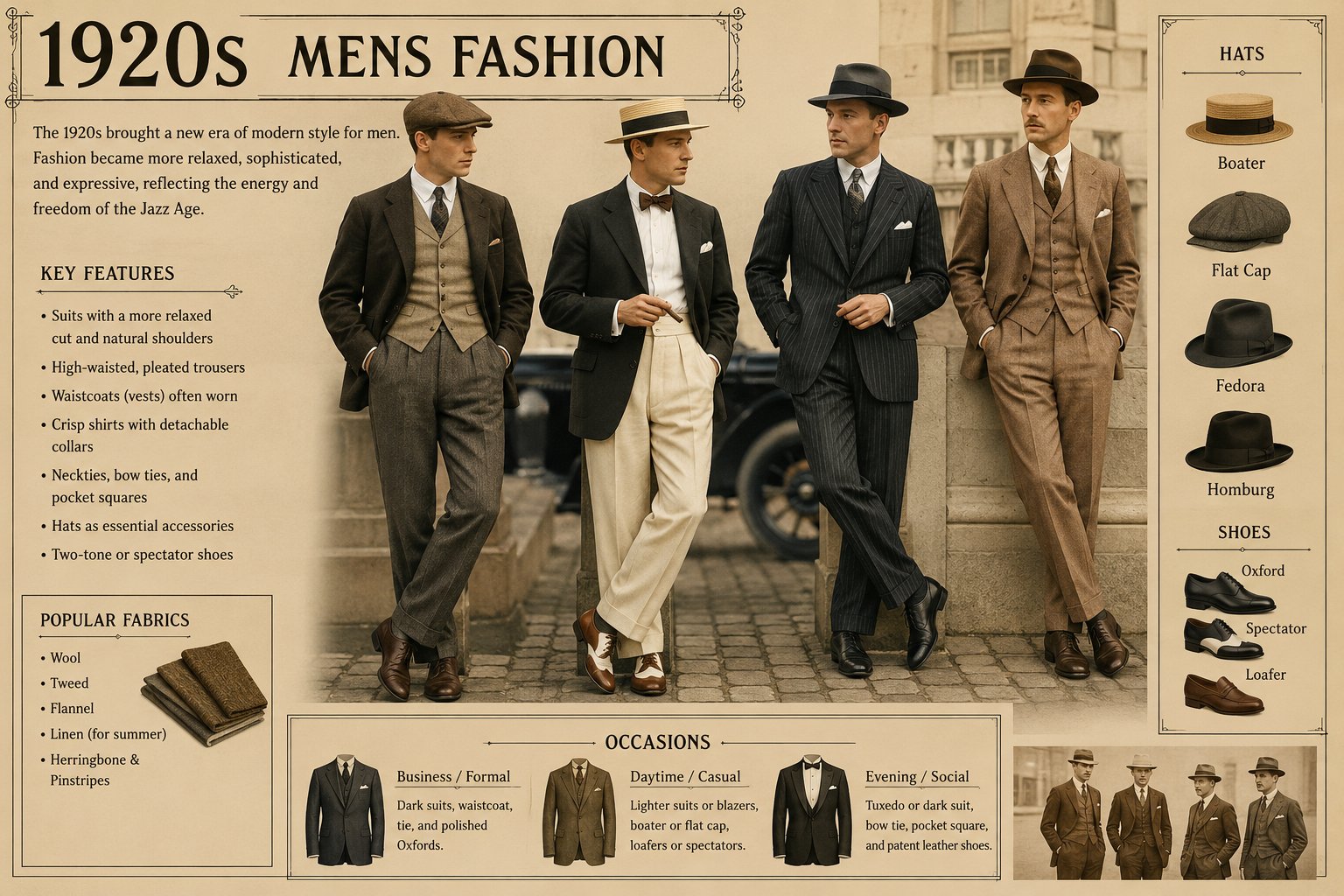
The rise of 1920s mens fashion became most visible through the iconic Roaring Twenties suit, which served as the foundation of men’s style throughout the decade. After World War I, men gradually shifted away from stiff, heavily structured clothing and began embracing softer tailoring that improved comfort and ease of movement. The three-piece suit—made up of a jacket, waistcoat, and trousers—emerged as the standard choice for both formal and semi-formal occasions. This style carried strong cultural meaning beyond appearance. It reflected elegance while also expressing confidence, modern masculinity, and rising social status in a rapidly changing world. Designers adapted suit construction to match new lifestyle demands, allowing men to look polished without sacrificing comfort. As a result, the Roaring Twenties suit became a defining symbol of 1920s mens fashion and set the foundation for modern tailoring.
At the same time, suit design became more relaxed in structure, with natural shoulders, looser fits, and high-waisted trousers that often featured wider legs. These changes reflected the influence of urban lifestyles, jazz culture, and the growing popularity of social dancing. Clothing was no longer just about strict formality; it was about expressing personality and adapting to a faster, more modern way of life. This shift marked one of the most important turning points in menswear history.
Fabrics, Patterns, and Colors
In 1920s mens fashion, fabrics played a major role in defining both style and social identity. Wool became the most commonly used material because it offered durability and held its structure well, while tweed and flannel gained popularity for their comfort and seasonal flexibility. These materials helped men dress appropriately for both formal business environments and more relaxed social occasions. Designers and tailors focused strongly on quality craftsmanship to ensure garments looked refined and also worked well for everyday wear.
Patterns and colors also became an important part of men’s style during this era. Subtle designs like pinstripes, checks, and herringbone added depth and sophistication without appearing overly flashy. Color choices generally stayed within a muted palette of greys, browns, navy, and earth tones, reflecting the era’s preference for understated elegance. Instead of bold experimentation, men used texture and pattern to create visual interest, making their outfits look polished, professional, and socially appropriate for the changing modern world.
Iconic Accessories of 1920s Men
Accessories were a defining element of 1920s mens fashion, often used to complete an outfit and communicate social status. Hats were the most essential accessory, with fedoras, bowlers, and flat caps commonly worn in both formal and casual settings. A man without a hat was often considered underdressed in public, as headwear represented respectability and refinement. Alongside hats, pocket watches remained popular, symbolizing tradition and attention to detail in an era that was rapidly modernizing.
Other important accessories included tie pins, cufflinks, pocket squares, and suspenders, all of which added subtle elegance to otherwise simple suits. These details were not just decorative but also functional, helping to maintain the clean and structured appearance that defined the decade. Even shoes played a role, with polished leather footwear and occasional spats enhancing formal looks. Together, these accessories helped shape a complete and polished identity, showing that style in the 1920s was built on attention to detail.
Casual and Sportswear Influence
The evolution of 1920s mens fashion was not limited to formal suits; it also introduced a strong shift toward casual and sports-inspired clothing. As leisure activities like golf, tennis, boating, and outdoor social events became increasingly popular, men began to adopt more relaxed clothing styles suited to comfort and movement. Sweaters, cardigans, knickerbockers, and lightweight jackets started appearing more frequently in everyday wardrobes, especially among the middle and upper classes who had more leisure time.
This shift marked an important cultural change in how men viewed clothing. Fashion was no longer restricted to formal occasions but was becoming an expression of lifestyle and activity. Sportswear influenced everyday menswear design, encouraging looser fits, softer fabrics, and more practical outfits. This blending of elegance with comfort laid the groundwork for modern smart-casual fashion, making the 1920s a turning point in how men balanced style with functionality in their daily lives.
Hairstyles and Grooming Trends
Grooming was an essential part of 1920s mens fashion, with a strong emphasis on clean, sharp, and well-maintained appearances. The most popular hairstyle of the decade was the slicked-back look, achieved using pomade or hair oil to create a smooth, glossy finish. This style reflected discipline and modern sophistication, matching the structured and refined nature of the clothing worn during the era. Men took great care in ensuring their hair looked neat and controlled, as appearance was closely tied to personal success and social respectability.
Facial hair trends also followed a similar pattern of neatness and simplicity. While some older men still wore thin, well-trimmed moustaches, younger generations increasingly preferred a clean-shaven look that symbolized modern youth culture. Beards had largely fallen out of fashion, as the emphasis shifted toward a more polished and streamlined appearance. Overall, grooming in the 1920s was not just about style but about presenting a sharp, confident identity that aligned with the elegance of the decade’s fashion.
Social Class and Fashion Identity
In 1920s mens fashion, clothing had a strong connection to social class and played a powerful role in shaping identity. Wealthier men wore custom-tailored suits made from high-quality fabrics that reflected their status, profession, and lifestyle. Tailors carefully fitted and accessorized these garments to project authority and sophistication. In contrast, working-class men chose more affordable versions of similar styles, and manufacturers produced these in mass quantities while still drawing inspiration from the same overall trends.
Despite these class differences, the decade saw fashion become more accessible as department stores and ready-to-wear clothing expanded rapidly. Middle-class men adopted styles that closely resembled those of the elite, which gradually blurred traditional social boundaries. As a result, appearance became a powerful tool for social mobility, and dressing well influenced how society perceived individuals. In the 1920s, fashion no longer represented only wealth—it also functioned as a visual language of ambition, identity, and modern life.
Legacy of 1920s Mens Fashion Today
The influence of 1920s mens fashion continues to shape modern menswear, making it one of the most enduring style eras in history. Many elements introduced during this decade—such as structured tailoring, three-piece suits, and refined accessories—still appear in contemporary formalwear. Designers often revisit 1920s-inspired silhouettes in modern collections, especially when aiming to evoke timeless elegance and vintage sophistication. The balance between comfort and structure established in this era remains a foundation for today’s suit design.
The influence of 1920s mens fashion continues to shape modern menswear. It remains one of the most enduring style eras in history. Many elements from this decade still appear in today’s formalwear. These include structured tailoring, three-piece suits, and refined accessories.
Designers often revisit 1920s-inspired silhouettes in modern collections. They use them to create a sense of timeless elegance and vintage sophistication. The balance between comfort and structure from this era still guides suit design today.The 1920s also introduced modern style principles that mix formality with practicality. Clothing began to reflect both personality and lifestyle during this period. That idea still influences smart-casual fashion today.Details like pinstripes, waistcoats, and polished grooming continue to reflect this iconic decade. The legacy of the 1920s goes beyond history. It still shapes how men dress and express identity in the modern world.
Conclusion
The story of 1920s mens fashion highlights a powerful shift in how men approached clothing, identity, and social expression. From the rise of the iconic three-piece suit to the growing influence of casual and sportswear, the decade marked a clear transition from rigid tradition to modern versatility. Men began to value both appearance and comfort, creating a style language that balanced elegance with everyday practicality. This transformation was deeply connected to cultural changes, including urbanization, jazz culture, and new social freedoms.
Even today, the influence of the 1920s can still be seen in modern tailoring, formal wear, and vintage-inspired fashion trends. The emphasis on clean grooming, structured suits, and refined accessories continues to inspire designers and style enthusiasts around the world. Ultimately, the 1920s was not just a fashion era—it was a defining moment that shaped the foundation of contemporary menswear and left a timeless legacy in global style history.
FAQs
What is the main style of 1920s mens fashion?
The main style is the three-piece suit, including a jacket, waistcoat, and high-waisted trousers with a clean and structured look.
What fabrics were commonly used in the 1920s?
Wool, tweed, flannel, and worsted fabrics were most commonly used for both formal and casual menswear.
Why were hats important in 1920s mens fashion?
Hats like fedoras and bowlers were essential accessories that symbolized respectability, status, and complete dressing.
Is 1920s mens fashion still popular today?
Yes, many modern suits, vintage-inspired outfits, and formalwear designs still draw strong inspiration from the 1920s style era.
For More Updates Visit: essencegreek